Don’t Settle For Fish Sticks

Which meal will be your choice?


I offer you fresh-caught mountain-lake trout cooked under the stars, a meal prepared amid mountain peaks still covered with snow. The background music is the sound of a rushing stream flowing from the crystal-clear lake where you just caught your supper! The aroma of a campfire blends in with the crisp, thin high-altitude air. Smoke dances from the campfire as you watch your fish bake in the glowing coals. We’ve fashioned a makeshift table using a flat-topped boulder decorated with flowers from the nearby valley. Filtered water from the melted snow is waiting in your glass. A couple of side dishes along with a surprise dessert complete this mountain top meal. Will this be your choice, OR…

Do you choose to chow down a generous portion of microwaveable minced fish sticks? If nuked long enough, they will be crispy, yet still slightly mushy on the inside. Most of the breading falls away from the disintegrating particles. These particles resemble fish caught in an otter’s regurgitated flow. Dip these fish sticks into some ketchup, maybe drown them in ketchup, and they don’t taste half bad! They are so convenient. You could whip up a quick meal for unexpected friends. Add a couple of table decorations and you’ve got your own Valentine’s Day treat!

Decisions, decisions. What’s a guy or gal to do?

I’m guiding three young ladies on a trip to the Lake of the Clouds. The goal for these young ladies is to catch and eat the fish they hook. They share with me their plans to have an evening meal prepared under the star-lit night. I’ve guided many folks in these mountains and the lakes and streams that are in the valleys between rock-covered peaks. Accompanying these young ladies will be both a challenge and fun times for me.

These ladies were new to fly-fishing. They’ve never held a fly rod in their lives. The innocence of them never fly-fishing did not stop the dream they were taking part in.

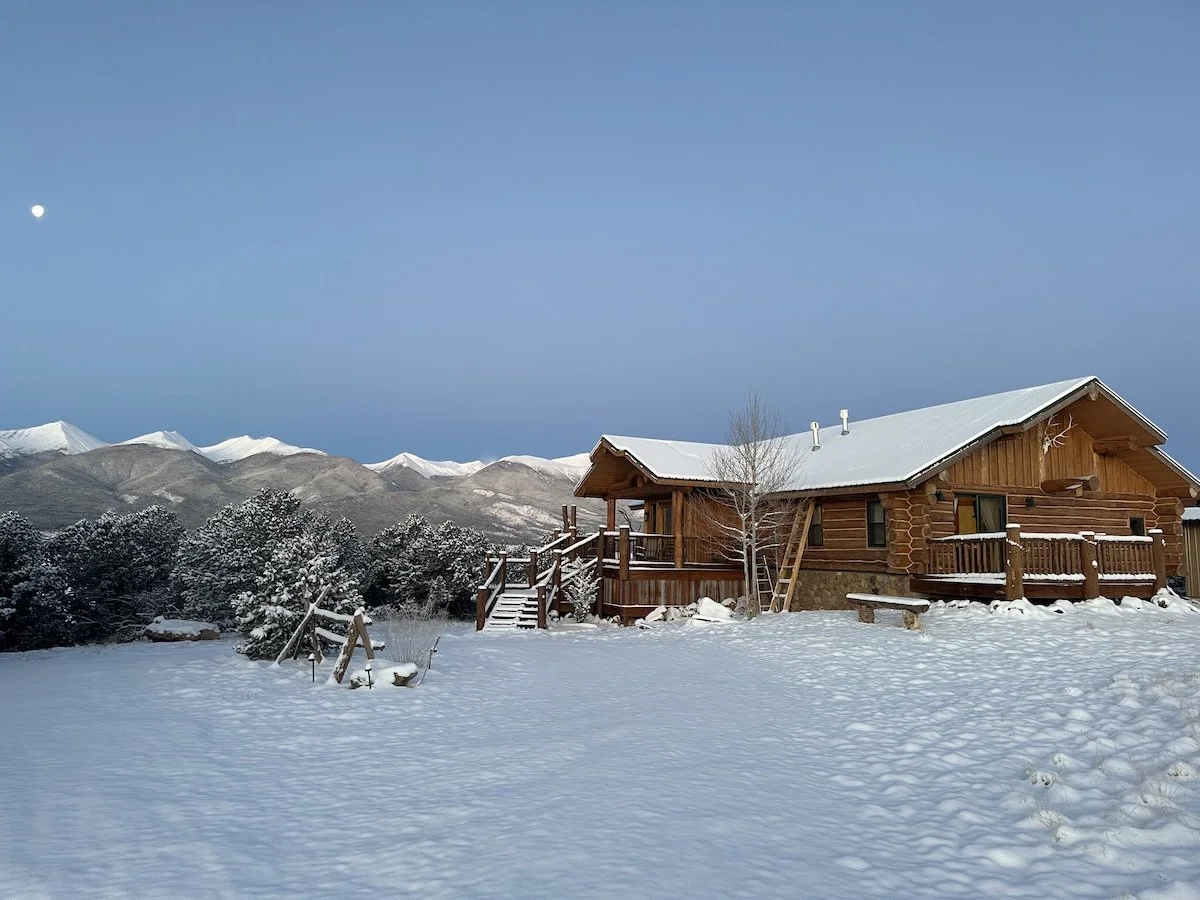
They spent a day and night at our log home on Higher Ground property. I give them lessons on how to fish. They learn techniques for presenting the fly. The rhythm of casting the fly rod is realized. Their practice cast throws the lure to the practice target, signaling a successful catch. They also catch nearby branches, their own hats, and one young lady’s own shoe.

My approach when instructing fly-fishing beginners involves posing one consistent question. Can you sing? If the person I’m teaching says yes, I then explain that it’s all about the rhythm. Once you find your rhythm, progress follows.

If a client can’t sing? We will clearly have our work cut out for us. It will get done; it just has to be explained differently.

Early the next morning, these three young ladies begin their hike to the mountain lake. Conversations with each other are non-stop. Hiking a four mile rocky path to a high mountain lake is their destination goal. Catching their own fish is the hoped for victory. Independence is what they are seeking. Plans are already underway for an all-night, sleepless camping experience. Why? They dare not waste any time sleeping during their safari into the Colorado Mountains.

We arrived at the rocky edge of the lake. They quickly put together their fishing rods and baited them with flies. Shouts of “Look, there’s a fish” abruptly interrupt my usual instructions on fishing and safety.

My sometimes inopportune ability to become invisible suddenly kicks in. These girls have become so excited that they don’t even know I exist.

Their excitement quickly takes a twist. The troublemakers called frustration and disappointment paw their way into these girls’ activities.

One lady spots a fish close to the bank. It quickly retreats to deep water when her fly lands with a loud splat above it. One lady fisherman has now caught the bushes behind her. She’s waving her rod left and right like a giant windshield wiper as she tries to break her fly free. The last young lady has suddenly tripped a ways down the lake and is battling in ankle-deep water to regain her balance and composure.

I guess it’s now my time to teach a life lesson with these three adventurers. “Let’s take a break, ladies,” I said. “Ya’ll gather here round this tree stump.”

Our next ten minutes of dialogue with each other unveils a significant amount of concern from my fishing students. Questions concerning how they were casting were the chief topic. They then reveal their true emotions. “I don’t know what I’m doing. This is too hard.” I’ve heard this from many folks who are fishing.

As an experienced fisherman, their next words hurt me the most. “I’m not good enough. I give up.”

After they circle underneath a spruce tree, I kneel beside them and present them with a gift. “Here you go, ladies, no worries.” It was a smashed box of half-frozen minced fish sticks. “If you catch nothing, we still have food.” The silence and wrinkled faces couldn’t conceal the confusion these girls faced.

“My advice as your guide is this. Don’t settle for fish sticks. With a little patience and a good bit of effort, you will catch fish for your evening meal. Don’t give up on your dreams just because life gets in the way. On our spiritual journeys, the same can be said. We settle too often and too quickly. An abundant life awaits if we can overcome just settling for less. Your life today comprised tangles, wet feet, and scaring the fish away. Girls, believe in your beliefs and doubt your doubts!”

One by one these young ladies made their way back to the lake shore. The encouraging words they were relaying to each other displayed new determination.

A splash and then a scream! “I’ve got one!” echoed across the mirrored lake. “Me too! Bring the net,” coming from just a few yards away, brought a smile to my face as I busily netted their fish.

Encouraging words shared between these ladies quickly turned to competitive talk. “Well, gals, I’ve got my supper. Don’t know what ya’ll gonna eat!”

“Oh yeah, you need to get a bigger net for this one.”

Netting fish occupied my time. These girls made pictures and took selfies, celebrating their luck with a high mountain toast.

As darkness spread across the valley, I started a roaring campfire as the campers prepared their sleeping bags for the soon-approaching chilly night. The girls gathered near the fire for the sheer pleasure of its warmth.

The fish underwent cleaning earlier. As I threw five fish on the red-hot glowing coals, a look of surprise shot from each girl’s face. “Won’t they burn?”

They receive an explanation that cutthroat trout have oily skin. The fish cooks perfectly within three to four minutes over campfire coals, flipping once.

The aroma of fish cooking combined with the cowboy coffee perking gave the area close to the fire a realistic Colorado Mountains genuine mountaintop camping fragrance.

I placed fresh-caught, campfire-cooked trout onto each plate. These plates already held side dishes, thus completing each one. Water filtered from the melting snow filled each girl’s glass. In the wilderness, this is fine dining at its best!

A prayer of thanks for the privilege of being encircled by God’s majestic creation quickly led to a chorus of “Amen”.

The long time of silence as they ate remains etched in my memory. The unease I was feeling because they might not like the food gave way to satisfaction of a job well done.

The ladies’ “Mmmmmm’s” and “Wows” convey their enjoyment with no need for words.

We spend our time watching the stars, satellites, and falling stars race across the horizon. Distant lightning flashes far away, signaling an electrical storm closer to Kansas than here in the Sangres.

The fire was retreating to a slow ember burning. It was time for me to retire to my sleeping setup. I maintain distance for privacy, yet remain available.

As I’m walking away from the girls and their fire, the words “Thanks for taking us” land on my ears. “No more fish sticks for us! Not in fishing or life in general.  We’re not settling for fish sticks!”

Maybe I wasn’t invisible after all.

I’m bundling into my sleeping bag and hear a young lady shout in my direction. “What did you do with the fish sticks?”

“The fish sticks? I poured them out at the tree stump just south of you. The bears like to eat them.”

“Bears?”

Lazarus He’s Gone, Or Is He?

Lazarus, the red-tailed hawk, has reached the end of his journey with me. Or has he?

Early October was when our paths crossed. His path was leading him 6 feet under because he was a goner. My path was giving me an avenue for much learning about this hawk and his fight for survival.

Lazarus had suffered from external injuries such as broken wing feathers. Internally, damage from parasites had needed mending. His desire to survive had fought through his obstacles. The spunk he possessed had inspired me to go above and beyond with his treatment.

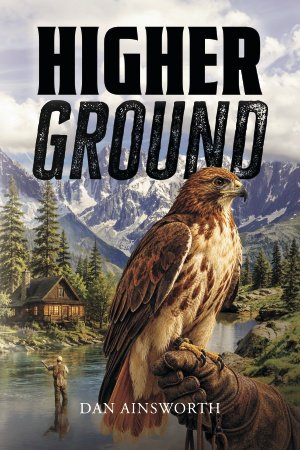
The pen was Lazarus’ safe place, his very own Higher Ground. A place of peaceful solitude, a resting place, perhaps just a place where nothing had to be rushed, allowed him a complete recovery after the molting of his feathers. My schedule involved a lot of travel, so I had recruited a good friend, Brian, to care for Lazarus while I was away. My time away allowed a bond to grow between Brian and Laz.
Brian and I had seen the spirit within this bird of prey. His regained strength was noticeable when he clasped the glove firmer each day. Laz would greet each of us in anticipation of his next nutritious meal. Lazarus’ improvement gave us fulfillment. His flights grew longer. Lazarus’s physical changes showed evidence of his rebuilding. We’d remember numerous occasions when conversing with a hawk didn’t seem crazy after all. The rekindling of life, whether bird or man, gave new meaning to everyday activities.
Lazarus’ freedom day transformed into a reunion for friends keen on observing his initial flight returning to nature. We had opened the gate. Several moments passed before Lazarus had realized he could fly away from the pen. With a few flaps of his restored wings, he had flown to a nearby tree. His return to this wilderness location occurred quietly. Seeing him casually settled on the tall pine had produced satisfaction in the crowd. A few waves goodbye, and some pictures of his departure signaled the end of this bird’s restoration. Lazarus’ finale with humans had taken place. Or had it?

My last thumbs-up to Lazarus served as a salute in two ways; the happiness of his complete recovery, woven into the blues of us parting ways.
 Over the past months, my whistling to him, Laz meeting me at the gate at mealtime, his chomping his beak with anticipation, all were thrills given as our bond had grown strong. The bond that had formed would now dissolve, as no physical interaction between man and hawk would keep it flourishing.

When asked if Lazarus still soars the valley near Higher Ground, subconsciously I go to the part of my brain that contains all the images and memories of my favorite hawk. There’s the image on a frosty October morning when Staci and I had picked up a lifeless bird. Lifeless, except for what had radiated from his eyes. Another picture etched in my brain is the selfie I took with me and Laz. He flew within inches of my right shoulder. He perched on his favorite limb beside me just to hang out, to say thanks, to just be with me. That moment, in Colorado’s wild, a hawk’s presence revealed my own untamed spirit’s goodness.

His rehabilitation period was for eleven months, from early October to the following September. Atrophied muscles slowly strengthened back into a powerhouse for providing sustained flight. His wing’s damaged-beyond-repair feathers molted, and new high-functioning flight feathers replaced them.
Feathers previously eaten away by parasites revealed bare patches of skin, exposing him to the harsh elements of Colorado. The eleven months of time allowed for healing. Newly grown feathers have now covered Laz from head to talon. He’s even taken on a much darker tone as he’s matured. People shown the before and after pictures of Lazarus had sworn it’s two different birds.

It was. One picture showed him on the verge of death. His body was so lifeless that he could barely stand. The other picture showed him on the fringe of a new frontier. His eyes blazed. The fire spread through his reconditioned feathers. He felt ready for life’s challenges.

The day before Lazarus was transported to Brian’s property for his future care, proved to be bittersweet. . Resting on the ground was one of his red tail feathers. That feather has become a special ornament on my fishing hat. A part of Laz goes with me now on my continuing journeys in the wilderness. The red tail feather now adorning my hat is proof of the connection Lazarus and I share.

Do I truly see Lazarus in the valley? It’s a fun conversation topic with people. Folks around Westcliffe know me as that ‘ hawk guy’. They’ll comment about seeing a hawk who didn’t seem afraid of them. Maybe they were walking by one in a field, or they saw one perched on the light pole at the town post office. Is that possibly your bird? I can truthfully answer, yes, that’s my bird.

My favorite bird is the red-tailed hawk. Just what they represent to me. So if you see that hawk, just remember you are looking at my hand-picked choice of all the feathered friends we get to enjoy.

Should the question focus on whether it is indeed Lazarus, then my response would be no. So much vast open country in Colorado and neighboring states, he could be anywhere. It would be exciting news to know where Lazarus would choose to call his home territory.

I remember a few years ago my son called me with his exciting news. As luck would have it, I was in this Wet Mountain Valley enjoying the view of this spectacular range of mountains. I remember it so vividly because of the substance of my son’s phone call to me as I was driving.

“Dad, Jill and I have something to tell you!” my son Jordan announced. Those words over the phone send a father’s brain into overdrive. “What’s up?” was all the response I could give.
“We wanted to share with you before telling others. We are getting married.”

The bond I have with my son is precious and strong. So strong that he wanted me in on one of his proudest days.
 I’m still celebrating.

I bring up my son’s good time with me because of this.

Reasonably, my tenure with Lazarus has ended. Or has it?

Late in the afternoon, I’m once again enjoying the never-tiring view of the Sangre de Cristo range of mountains. This rewarding view is being seen as I sit in my favorite chair resting on my front deck.

From the valley floor south of me, high in the bluebird sky, blows in the unmistakable sound. “Kkrrrrrrrrr”, the sound fills my ears with a sweet-sounding proclamation of an approaching red-tailed hawk. He’s soaring effortlessly in the warm thermals, circling with the air currents that keep him aloft. My eyes watch him as he dances high above. Such a gift God has given me to be in tune with and appreciative of his awe-inspiring creatures. The hawk has intentionally removed himself from the thermal and is flying towards me. Still several hundred yards away, but I wonder. I give my best version of a red-tailed hawk’s call, hoping for a response.

“Kkkrrrrrrr”, I whistle. Immediately I’m met with a hawk’s cry from above, but coming closer. “Kkkrrrrrr,” I almost knock the chair over as I stand and grab onto the log railing of the deck. “Kkkrrrrrr,” I repeated. “Kkkrrrrrr” comes an immediate answer. I quickly took my phone from my pocket with my free hand and started recording a video. Could it be?
 It was highly convenient that my grasp still clenched the log railing as I almost fell backward. The hawk is less than 100 feet away, showing off its maneuvering skills. He is darting and catapulting in the air, showing off his God-given abilities. Witnessing this extraordinary aerial event at Higher Ground; my breathing and possibly my heart stopped.

Flying even closer now were not one, but TWO hawks, circling together! They performed acrobatic interlacing with their flights. One would dive and the other followed. Flapping of wings in unison signified that they were a team. These hawks appeared committed to each other forever.

I’m still celebrating!

Lazarus the Hawk: From Near Fatal to Far-Away Freedom

Pitiful. It was the only way to describe the condition of this wild red tail hawk. Covered with parasites, emaciated from lack of food, this bird was just hours away from death. In my gloved hands I’m holding a fatigued, lifeless body. I’m debating whether to end this poor creature’s struggle. Putting him down would be the obvious decision to end its suffering.

Screenshot
notice his damaged right wing

  But that’s when I saw it. Those eyes. Fierceness was glaring from its eyes. The fierceness it takes to come alive!

Just another normal day here in Westcliffe, Colorado. Normal until the phone call from a good friend. Mike tells me that his dog just caught a hawk. He wanted to know if I would want it. 

Mike knows I am a master falconer. I’ve flown birds of prey for 25 years. I’ve never hunted with a hawk caught by a dog, though. Either that dog can jump high and fast, or this bird is near death.

New falconer-raptor pairings create excitement. We normally trap a wild bird of prey to begin our journey and relationship together. Falconers take a wild bird and within less than a day the bird will eat from the falconer’s hand. “Manning” involves birds of prey learning their human partners bring no harm but share in the adventure of coexisting with this majestic creature for a period.

Staci and I arrived at Mike’s with anticipation and a bit of dread. Nature can be cruel. Remember her number-one rule. It’s the survival of the fittest. When an animal in the wild gets hurt, sick, or diseased, it must overcome whatever has befallen it. Or well, survival of the fittest.

We take the hawk home. Staci and I are both concerned about this hawk’s condition. I’m an outdoorsman and an avid hunter. Strange as it may seem to some, I have a tender heart as well. I want to help this bird. This hawk can’t even struggle to get away from me. It just sits lifeless in my lap.

I have prepared small bits of raw chicken soaked in water to feed the hawk. Hopefully he will eat, but his listlessness is giving me worry. He doesn’t even hold his wings up. They fall droopingly by his side. The hawk has a damaged wing. The last four primary feathers are gone. Losing this many feathers will cause any bird of prey to not be able to stoop, maneuver, and most importantly, fly to safety.

What happened to him? Most likely he got sick and weakened so much that he couldn’t hunt. Birds of prey have to hunt to survive. They eat meat. They don’t eat a salad! Once he got in such awful shape that he can’t hunt, his condition became critical.

I carry his exhausted body to the mews built by me for my birds used in falconry. It’s a fenced-in pen where he (hopefully) can one day fly around. It won’t be today.

Jesses and anklets go around the hawk’s legs. Then, jesses and anklets attach to a leash. Picture your dog with a collar and a leash. In the same way, I can then control this hawk to stay near me and perhaps on my glove, like all other wild hawks I’ve caught over the last 25 years.

Poor bird doesn’t even resist my fumbling fingers placing the anklets on him. He’s in terrible shape. A healthy red-tailed hawk will weigh from 2 to 4 pounds. His weight showing on my scales as I weigh him: just over a pound. This is bad. But there’s something worse. He’s covered with flat flies and bird lice. Strange how in nature parasites can appear from nowhere and find the weakest of the weak.

The parasites have already damaged many of his feathers beyond repair. Feathers on his breast and belly that normally provide warmth are half eaten away by parasites.

Seeing the lice and flat flies crawling over him causes me to recoil. I’ve accidentally had bird lice and flat flies crawl onto me before when handling birds. It’s more than a creepy feeling. Even now, I’m itching under my hat, on my arm, on the back of my ear. Whether it’s just my imagination or a parasite, stripping and a shower before I enter my home is in order.

I set the hawk on the ground. He collapses into a ruffled bundle of feathers. He attempts to spread his wings in a defensive posture. Instead of presenting a scary spread-eagle stance, he exhibits all his damaged feathers. Instead of displaying a dangerous set of talons, he rests on his side with his talons flailed out helplessly in front of him.

 A calm and reassuring voice is about all I can contribute. He gets a gentle nudge from me to position him in an upright position. He will probably not survive.  But those eyes. The fierceness in his eyes.

The hawk doesn’t move as I sit on the ground next to him. Still scratching my beard from possible parasites, I reach out with a morsel of food. Gently I place the piece of chicken in its mouth. Hawks instinctively open their mouths when they are on the defensive. He’s too weak to bite me as I placed the meat in his mouth. For a few moments, neither of us moved. I then gently force the meat into the back of his mouth.

It’s up to him now. He will not receive nourishment if he refuses to swallow. I can do only so much for him.

He swallows! Thank ya Lord! He swallowed the morsel of food! It’s hard to tell whether he realized I was feeding him. It’s probably just an impulse to swallow when there is food being crammed down your throat.

I pushed three more bits of meat down his throat. Then we call it a night. Forcing more on the first day would not benefit him. His body may not digest his meal. He could go into shock. A step forward, yet many potential issues loom.

It was a restless night with little sleep as I waited for the morning light to arrive. What scene would unfold when I arrive at his pen? Half expecting a dead bird, half expecting a hawk lying unconscious, I entered with a bowl full of cut-up pieces of chicken. There he stood! He remained motionless as I sat down beside him. I couldn’t help but talk soothingly to him. A bit of joy swelled up within me as he blinked twice, trying to focus on me. Again, those eyes reveal something more than just to exist from within this bird of prey.

I placed a piece of meat within an inch of his beak and remained motionless to see his response. An immeasurable amount of joy brought a smile to my face when the hawk bit the meat from my glove and swallowed it. 

Quickly now I place bits of meat close to his beak. Just as quickly he devours them. We are on the right path, going in the right direction now. 

This hawk, on the second day of our journey, has gone from near-comatose to having a 50 percent chance of survival.

Day three was interesting. When I arrived at daylight to give him food, he had somehow crawled his way to a limb sitting on the dirt. He was using this as a perch. One more sign that he was returning from the dead. I placed a tasty piece of meat in front of him. With lightning speed, he reached out with his talons and clawed my gloved hand. 

You’ve heard the expression, “hurt people hurt people”? Well, hurt hawks hurt people as well. This was a wonderful reaction from this hawk, though. The alertness in his eyes was now accompanied with a defensive snatch of my glove. Good, he’s now aware of his surroundings.

One fascinating truth that falconers understand when training their hawks; don’t look at them. Only look at them using your peripheral vision. It’s best to see them from the side, not from the front. See in the wild, if a hawk is looking at another animal and the animal is looking straight back, one of them is getting eaten. Kill or be killed.

I don’t want this hawk to feel uncomfortable. I want him to relax. Over the next several days, he becomes conditioned to my movements. 

His diet that he’s being fed will always comprise meat. I vary the types of meat to give him various sources of minerals, vitamins, and most of all energy.

After seven days, his condition had improved tremendously. He even steps towards me to grab a bite of meat. This is important as it shows he’s trusting me. 

Why haven’t I named him, you ask? I didn’t want to jinx his progress from the grasp of death. My son shared with me that his name ought to be Lazarus. 

The Bible tells of Lazarus rising from the dead. It seemed fitting, so Lazarus it is.

Lazarus became accustomed to me. Suspiciously, it would take him a moment, but then he would hop to me. His damaged wing prevented him from flying long distances. He eventually would flap five or six times to propel himself awkwardly to my glove holding his meal.

Because of his damaged wing, I could not release Lazarus back into the wild. He would need new feathers. Hawks molt their feathers late in the summer. I committed to rehab Lazarus into the next year then release him.

Hawks are not pets. They remain wild. Even when falconers catch and use them to hunt, they automatically return to their wild way of life when released. Licenses and various permits are required to possess a bird of prey. This keeps you and them safe. Let me repeat: they are not pets.

A bond grew between Lazarus and me. I want to say it was affection or a bond of love. You need to understand, though, that in my falconry career I have had several hawks and owls. They view their human partner as a refrigerator. The hawk that is being used in the sport of falconry is free to fly away if it so chooses. The hawk realizes, though, that I have a chicken leg in my pocket. When we are on a hunt, if we don’t have success chasing a rabbit or squirrel, he knows I will call him in for a KFC raw chicken leg treat!

The bond between Lazarus and me was truly from love. At least from my point of view. Lazarus taught me so much about life. He became a way for me to understand spiritual matters.

Think about this. Two entirely different creatures, a hawk and a man, form a bond and share life with each other. Reminds me of two other creatures. God and me. The mystery is immense, but somehow a Holy, all-powerful God brings me back from the dead and creates a bond with me. Because of His love.

Did Lazarus love me? 

I was sitting at the other end of the pen after feeding Lazarus a belly full one day. This was about a month after we began our journey (and relationship) together. It was basically just a quiet time for me. You’ve had these quiet times if you’ve got pets or animals. Whether it’s your horse, dog, cat, or even the chickens, haven’t you had a reflective time just being around them?

Here’s what I will never forget. There’s even a selfie to prove it. Lazarus, a wild red tail hawk, was pretty much dead. Because of me, he gets a new lease on life. Lazarus and I sharing moments brought immense joy. What exhilarated me the most was when Lazarus flew within inches of me and landed on his perch. He did it on impulse, without prompting. I will forever say because I felt it in my soul, that Lazarus flew over to me as if to say, “Hey thanks friend.”

The Lord is close to the brokenhearted and saves those who are crushed in spirit. Psalm 34:18

See Ya! Dan Ainsworth, wilderness preacher, and falconer

Next month’s blog….. The release of Lazarus back into the Wild! stay tuned